
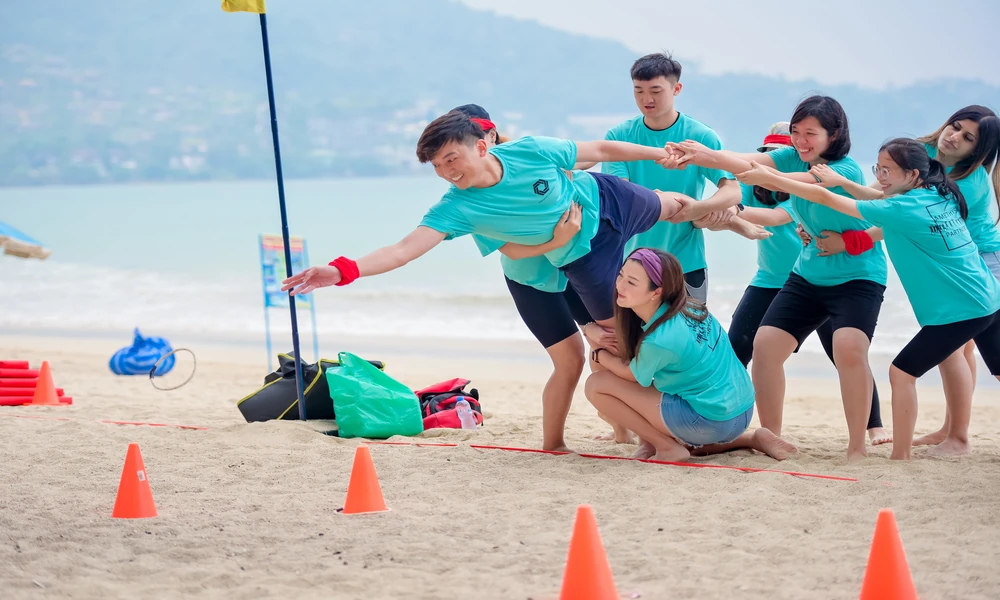
For two years, they’d only seen each other from the shoulders up. A designer in Manila, a developer in Melbourne, a product lead in Berlin, all squares on a screen with slightly frozen smiles. Then, on the first evening of their offsite, they’re standing around a hotel cooking station in Phuket, arguing about how much chilli belongs in a curry paste. Nobody’s on mute. That small, noisy moment is exactly why a team building phuket hotel trip can do in three days what a year of video calls couldn’t.
Why in Person Still Matters?
Remote teams can work well together. Plenty do. But video calls tend to stay on task, and the casual conversations that build trust rarely happen in a scheduled thirty-minute slot.
Meeting face to face fills that gap. People learn how colleagues think, what makes them laugh, and how they react under mild pressure. Back home, a terse message from someone you’ve shared a meal with reads very differently from one sent by a stranger.
Adrenaline Isn’t the Shortcut
Here’s a belief worth questioning. Many companies assume the best team building involves high-energy challenges, zip lines, competitive races, intense obstacle courses. The bigger the rush, the stronger the bond.
That rarely holds up. Activities that push people physically often leave quieter team members on the sidelines, nervous or simply uninterested. The loudest voices dominate, and the people who most needed to connect drift to the edges.
Why does the belief persist? Dramatic activities make great photos for the company newsletter. Gentle conversation over dinner doesn’t. Yet it’s usually the second one people remember months later.
Activities That Actually Bring People Together
The best options give everyone a role without putting anyone on the spot. At a well organised team building Phuket hotel programme, a mix of structured and relaxed time tends to work best.
- Thai cooking class. Small teams, shared stations, everyone eats the results.
- Beach clean-up. Purposeful, quiet, easy for anyone to join.
- Muay Thai basics. Light, playful, focused on technique rather than fighting.
- Island boat trip. Hours of unstructured conversation on deck.
- Old town scavenger hunt. Small groups, clues, a lot of laughing at wrong turns.
There’s a noticeable shift around the second day. People stop sitting with their own departments at breakfast. That’s usually the first real sign it’s working.
Timing and Weather
Phuket’s drier months, roughly November to April, suit outdoor activities and boat trips. From May to October, the southwest monsoon brings heavier rain and rougher seas, so programmes lean more on indoor sessions like cooking classes, workshops, and spa time.
Hotels used to host corporate groups usually have backup plans ready. It’s worth asking exactly what happens if a boat trip gets cancelled.
Leave Space for Nothing
The most overlooked part of any offsite is free time. Packed schedules leave people tired and slightly resentful. An empty afternoon by the pool often produces better conversations than any planned activity.
Common Questions
How long should a team-building trip last?
Three to four days usually gives enough time to connect without exhausting people.
What if some team members dislike group activities?
Offer choices. Not everyone needs to join everything.
Are hotels in Phuket set up for corporate groups?
Many are, with meeting rooms, event coordinators, and activity partners.
Should work sessions be included?
A few short ones help, but keep them focused and leave afternoons free.
Before You Book
Send a short, anonymous survey to your team asking what kind of activities they’d genuinely enjoy and which they’d rather skip. Share the results with the hotel’s event coordinator, and build the programme around the top three answers.