
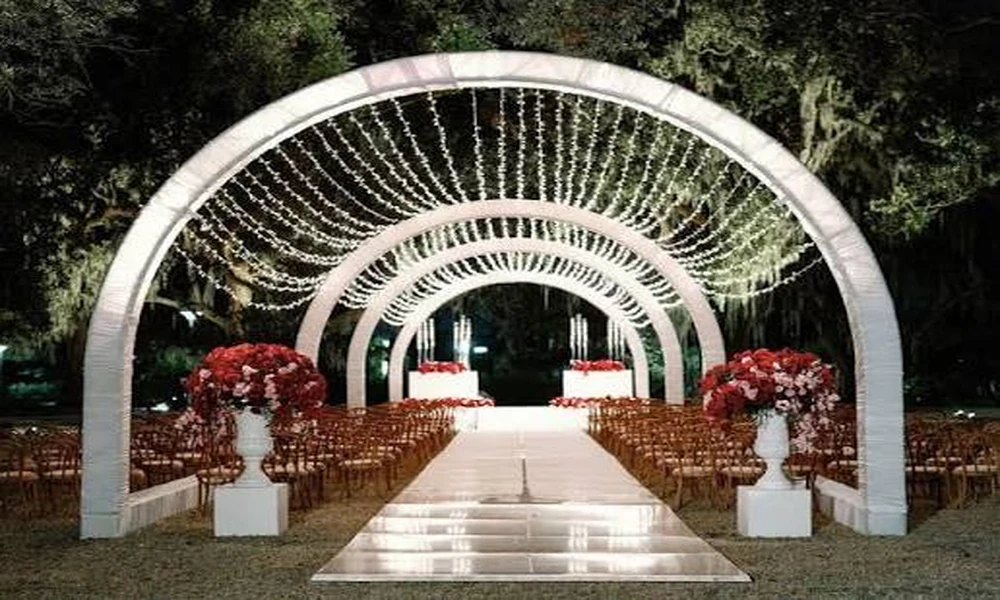
Why Lighting Is the Most Transformative Wedding Rental
String lights and bistro lighting have earned their position as the most requested outdoor wedding rental category because they do something other decorative elements cannot: they define the space after dark. A venue that looks beautiful during the ceremony looks like a dark field without the right lighting for the reception. The right lighting system turns that same venue into the warm, intimate space that guests remember and photograph.
The appeal of bistro lighting is specifically the quality of light it produces – warm, omnidirectional, at a height that illuminates the space at human scale rather than from above. Standard overhead lighting or flood lighting produces a different quality that feels functional rather than festive. The visible bulbs and the hanging arrangement create a visual ceiling that defines the event space without literal walls.
Getting this look right requires planning beyond selecting a quantity of string lights. Span distances, attachment points, power source locations, the density of strands, and the relationship between lighting height and table configuration below all determine whether the finished result looks like the inspiration images that drove the decision or like lights strung haphazardly.
Planning the Installation
Bistro and string light rentals for weddings planning begins with a scaled diagram of the venue space – actual dimensions, not approximate. Span distances between attachment points determine strand lengths; attachment point availability determines the grid configuration; power source locations determine where strands connect to electricity. Planning this on paper before ordering prevents the situation of arriving with lights that span the wrong distances or don’t reach the available power.
Density – the number of strands per square foot of event space – determines whether the finished look is full and dramatic or sparse and underwhelming. The typical recommendation for a full, photogenic look is strands spaced 18 to 24 inches apart across the entire event space. Spacing strands at 36 inches produces a sparser look that photographs differently and provides less ambient light at the table level.
The Knot wedding vendor coordination guidance addresses lighting rental specifically, including the question of who is responsible for ensuring electrical capacity is adequate – whether the venue provides sufficient amperage for the planned lighting load or whether a generator is needed – and how to coordinate the lighting installation with other setup vendors who need to work in the space.
The Day-of Sequence
String light installation should be among the first setup tasks rather than the last, because it establishes the spatial framework that other décor elements are arranged within. Tables and chairs positioned after lighting is installed can be adjusted to the grid; lighting installed after tables are set requires working around furniture and is significantly more difficult.
Weather considerations for Utah wedding lighting include wind loading – string lights become dangerous in high winds, and the attachment system needs to be rated for the wind conditions common at the specific venue – and rain, which most string lights can handle for brief periods but which damages non-weatherproof fixtures. Asking the rental company about wind ratings and wet weather protocols before the event, not on the day of, allows contingency planning.
Power draw calculation before event day prevents the discovered-at-setup problem of insufficient electrical capacity. Each 48-foot strand of standard bistro lights draws approximately 40 watts. A 40-strand installation draws 1,600 watts – less than 14 amps on a 120V circuit. Most outdoor venues can accommodate this load, but venues with limited outdoor electrical infrastructure may need a generator for larger installations.